News
HematoApp: Improving the Quality of Life for Lymphoma Patients
With the aim of improving the interaction between lymphoma patients and the healthcare system, the mobile application HematoApp emerges. Read the article.
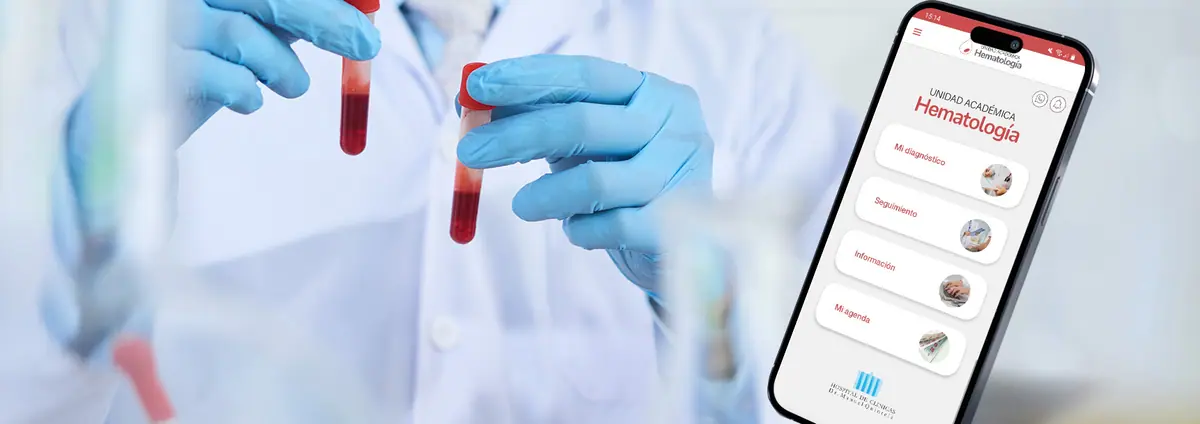
Lymphoma is a cancer that develops in the white blood cells of the lymphatic system, which is part of the body’s immune system. In our country, this disease affects 16 out of every 100,000 inhabitants.
HematoApp was created with the goal of improving interaction between lymphoma patients, the healthcare system, and various providers.
Juan Ignacio Machado is the founder of Fibras, an non-profit association where individuals, companies, and organizations come together to support and accelerate projects and ideas, using technology as a platform to generate a sustainable social and environmental impact.
It is from Fibras, and based on a concern raised by Dr. Matilde Boada and Dr. Sofía Grille from the Haematology Department at the Hospital de Clínicas, that work begins on meeting the patients’ needs: a mobile application that allows them to have a smoother interaction with the healthcare system, where they can access specific information about the type of disease they have, treatments, and upcoming appointments.
In the first phase, Doctari participated in the initial study to define the features the application needed to have.
At K2BHealth we supported the development of the tool (features such as user management, log-in and interface). This experience adds to other digital health projects driven by the company in the region, such as the INCAN interoperability platform, designed to interconnect systems and improve continuity and quality of care for patients.
IDATHA (from the Pyxis ecosystem) developed functionalities related to artificial intelligence, while Pyxis was responsible for the design and implementation of the infrastructure and its support.
Juan Ignacio Machado says he hopes the tool will be extended to the whole Hospital de Clínicas and, eventually, to every condition, so as to help more people. He explains that in this case it was limited to Haematology in order to learn, measure and improve on whatever emerges from that department. Along this path, hospital management systems play a key role in supporting the digitalisation of processes, centralising clinical information and strengthening coordination between patients, medical teams and institutions.