


Intra-hospital transfer management is an essential component in the daily operations of healthcare institutions. Effective management ensures that patients are transferred in a safe and timely manner, which has a positive impact on the quality of care and patient satisfaction. In this context, having appropriate technological solutions for the management of intra-hospital transfers becomes a key factor in optimizing these processes.
Conoce nuestra app de gestión hospitalaria para la gestión de traslados intrahospitalarios.

Consequences of Inadequate Hospital Transfer Management
Interruptions in the Continuity of Care
Poor transfer management can result in significant interruptions in continuity of care. Delays in transfers can lead to cancellations of critical procedures, delaying diagnoses and treatments, potentially worsening patient health outcomes.
Increased Stress and Workload for Staff
Healthcare staff face increased workload and stress when transfers are not properly managed. This can lead to errors, decreased team morale, and ultimately a decrease in the quality of care provided.
Inefficient Use of Resources
Poor management of in-hospital transfers leads to inefficient use of hospital resources, including staff time and the use of equipment such as stretchers and wheelchairs. This not only affects the hospital's logistics but also its ability to care for patients in a timely and efficient manner.
Impact on Patient Satisfaction
Patient experience is negatively impacted by poor transfer management. Uncertainty and delays can lead to dissatisfaction and decreased confidence in the healthcare institution.

What is a Stretcher Management Software?
A porter management software is a technological solution designed to automate the assignment and monitoring of the tasks of the staff in charge of patient transfers within a hospital. This type of software facilitates coordination between different areas and improves operational efficiency, which translates into faster and better quality care for patients.
Benefits of Implementing Intrahospital Transfer Management Software
Improved Coordination of Transfers
The implementation of specialized software allows for more effective and efficient coordination of intra-hospital transfers. Communication between staff is simplified, and information is shared in real time, minimizing the possibility of errors and delays.
Medical and Nursing Staff Time Optimization
By digitizing administrative processes related to transfers, medical and nursing staff can focus on what they do best: caring for patients. This translates into improved quality of care and greater patient satisfaction.
Reduced Operating Costs
An efficient in-hospital transfer system can significantly reduce operating costs. By avoiding delays and improving planning, resources are used more effectively, which can result in considerable savings for the institution.
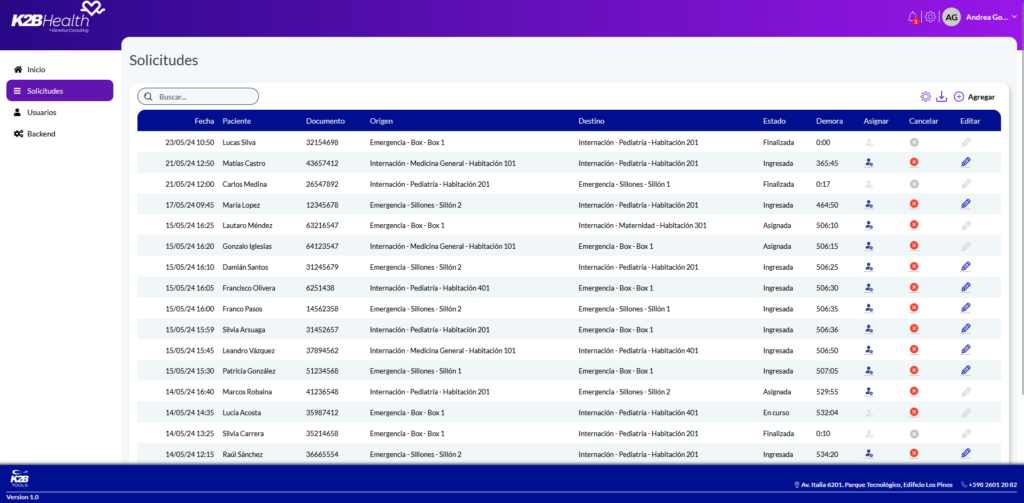
Caremove: Innovation in the Management of Intrahospital Transfers
Caremove is an example of how intra-hospital transfer management software can transform a hospital's operational efficiency. With a web-based system and a mobile application, Caremove connects administrative staff with orderlies, eliminating intermediaries and improving transfer management.
Además, en el webinar sobre traslados-intrahospitalarios, K2BHealth presenta los principales desafíos operativos de este proceso y muestra cómo una plataforma especializada permite coordinar solicitudes, realizar seguimiento en tiempo real y asignar recursos de manera más eficiente.
Caremove features
- Intuitive and Easy to Use Interface: Caremove has a user-friendly interface that facilitates its use without the need for extensive training.
- Tailored Customization: Adapts to the specific needs of each institution, allowing the configuration of devices, transfer types and more.
- Complete Traceability: Provides detailed and real-time information on each transfer, improving decision making and service quality.
- Pay-per-use model: Caremove is offered under a pay-per-use model, which means that institutions only pay for the resources they really need and use.
Caremove's Impact on Hospital Management
The implementation of Caremove has revolutionized the way hospitals manage in-hospital transfers. Thanks to its indicators module, managers can monitor and analyze key processes, identify areas for improvement and take corrective actions quickly and efficiently.

Conclusion
The digitization of in-hospital transfer processes is a trend that is gaining momentum in the healthcare sector. Adopting software such as Caremove can make a difference in operational efficiency, patient safety and overall satisfaction with the service provided. Healthcare institutions that take the lead in implementing these technologies will be leaders in providing high quality healthcare services.
The future of hospital management depends on the integration of technological solutions that optimize resources and improve patient care. Caremove is a clear example of how technology can be successfully applied to improve hospital processes and provide first class patient care.